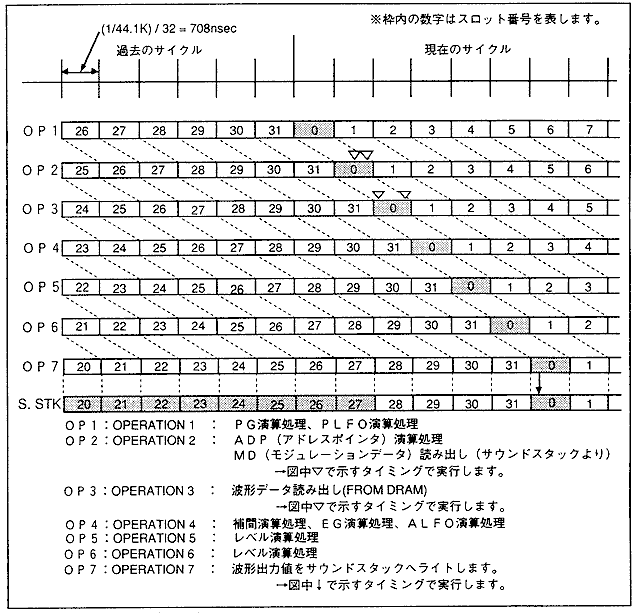
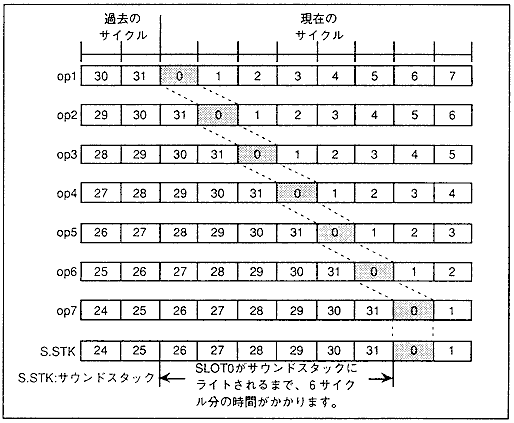
Here are some notes on actually realizing FM speech synthesis. Figure 4.26 Slot averaging operation ┏━━━━━━━━━━━━━━━━━━━━━━━━━━━━━━━━━━━━━━━━━━━ ┓
┃ Slot input / output Modulation input ┃
┃ ┃
┃ XY ・ ・ ・ Modulation input XY ┃
┃ ↓ ↓ ↓ ↓ ┃
┃ ┌─┴───┴─┐ ┌─┴────┴─┐ X + Y ┃
┃ │ Slot │ │ Average calculation unit │ = ─────── ┃
┃ └───┬───┘ └────┬───┘ 2 ┃
┃ ↓ ↓ ┃
┃ Waveform data output ADDRESS ┃
┃ Go to POINTER ┃
┗━━━━━━━━━━━━━━━━━━━━━━━━━━━━━━━━━━━━━━━━━━━┛
The source you enter into the slot is the data in the sound stack ("SOUS"). Therefore, modulation in a slot means assigning and connecting the sound stack corresponding to the modulation slot to the slot to be modulated. As an actual function, there are "MDXSL" and "MDYXL" that select the sound stack to be input to the modulation inputs Y and X, so it is necessary to set the parameters obtained by the calculation method described above in this register. there is.
In addition, there are two modulation inputs to the slot, X and Y. Note that these two inputs are halved by the averaging operation. Therefore, if one slot input is connected, set the same parameters for the X and Y inputs so that the sound stack data for the same slot is input. If you set only one-sided input, unexpected data may be mixed in or the FM modulation degree may be felt to be small.
Next, using the calculation methods of "MDXSL" and "MDYSL", each parameter will be calculated using an FM sound source with a 4-slot configuration that is actually used in FM speech synthesis as an example.
First, we will explain how to read the FM speech synthesis algorithm shown in Figure 4.27.
Figure 4.27 4-slot configuration algorithm
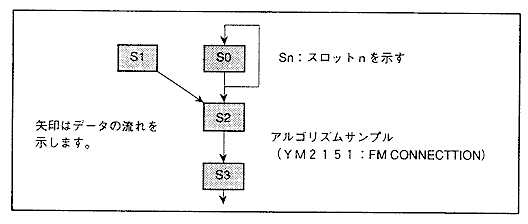
● Slot 0 Slot 0 uses the output for the input of slot 2, while the output of slot 0 is used for the input of slot 0. This is called self-feedback. ● Slot 1 Slot 1 uses the output as the input for slot 2. ● Slot 2 Slot 2 uses the outputs of slot 0 and slot 1 as inputs. The output is used for the input of slot 3. ● Slot 3 Slot 3 takes the output of slot 2 as input. No output in slot 3 is connected, but we will use it as an audio output. (1) Parameters to be set in slot 0 Figure 4.28 Slot 0 algorithm
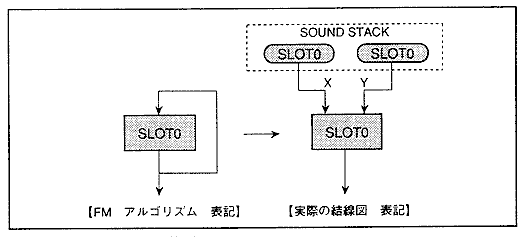
Self-feedback configurations such as slot 0 require the sound stack containing the output data in slot 0 to be connected to the modulation inputs X and Y.
Since the sound stack has the latest sample and the past sample for the sample currently being calculated, input the latest sample or the past sample to both the modulation inputs X and Y, or the latest sample to one and the past sample to the other. There are three possible input methods. ※caution However, in the case of self-feedback, if you input the same sample, it may oscillate, so please input the latest sample on one side and the past sample on the other side.
The values of MDXSL and MDYSL are as follows when substituted into equation 4.1 because both the slot to be modulated and the slot to be modulated are 0.
0-0 = 0
Since this satisfies condition 3 of Equation 4.1, the MSB of MDXSL and MDYSL is
At the time of the latest sample MSB = 1 ( 1 00000) B = 20H
In the past sample MSB = 0 ( 0 00000) B = 00H
It will be. (2) Parameters to be set in slot 2 Figure 4.29 Slot 2 algorithm
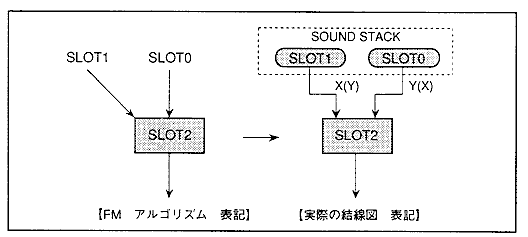
Since slot 2 is an input of multiple slots, there is no need to stick to the latest sample and past sample inputs.
The values of "MDXSL" and "MDYSL" with slot 1 as the input (slot 1 side) are as follows when substituted into equation 4.1 because the slot to be modulated is 1 and the slot to be modulated is 2.
1-2 = -1
Since this satisfies condition 2 of Equation 4.1, the MSB of "MDXSL" and "MDYSL" is
32 + (-1) = 31 = 1FH = (011111) B

For the latest sample MSB = 0 ( 0 11111) B = 1FH
For past samples MSB = 1 ( 1 11111) B = 3FH
It will be. Figure 4.30 Slot 2 algorithm (by input slot)
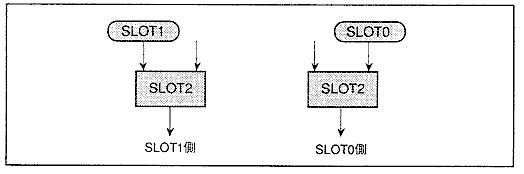
Next, the values of "MDXSL" and "MDYSL" with slot 0 as the input (slot 0 side) are 0 for the slot to be modulated and 2 for the slot to be modulated. Become.
0-2 = -2
Since this satisfies condition 2 of Equation 4.1, the MSB of "MDXSL" and "MDYSL" is
32 + (-2) = 30 = 1EH = (011111) B

For the latest sample MSB = 0 ( 0 11110) B = 1EH
For past samples MSB = 1 ( 1 11110) B = 3EH
It will be. ※caution Basically, when entering slots with different numbers, enter samples of the same generation. Conventional FM sound sources use this method, so use this method when porting the tone library of FM sound sources. (3) Parameters to be set in slot 3 Figure 4.31 Slot 3 algorithm
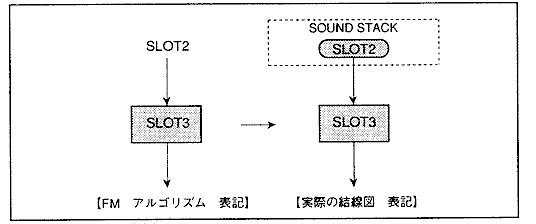
Since slot 3 has only one input, the output of slot 2 must be input to both modulation inputs X and Y.
Since there is no possibility of oscillation if the connected slots are different, you can input only the latest sample or only the past sample to both the modulation inputs X and Y, or input the latest sample to one and the past sample to the other. does not matter. When porting the tone library of a conventional FM sound source, use only one of the samples. The values of MDXSL and MDYSL with slot 2 as the input are as follows when substituted into equation 4.1 because the slot to be modulated is 2 and the slot to be modulated is 3.
2-3 = -1
Since this satisfies condition 2 of Equation 4.1, the MSB of "MDXSL" and "MDYSL" is
32 + (-1) = 31 = 1FH> = (011111) B

For the latest sample MSB = 0 ( 0 11111) B = 1FH
For past samples MSB = 1 ( 1 11111) B = 3FH
It will be.