Return to previous page | Return to menu | Go to next page
All software for Sega Saturn must work fine on multi-terminals, regardless of the number of players supported .
* Connecting a multi-terminal to the terminal of a multi-terminal does not have to be supported because it is considered as unconnected in terms of hardware .
When connecting to a multi-terminal, the number of terminals and the number of players that can be played will increase, so the following principles, which are an extension of the <Principle for setting corresponding input peripherals>, must be observed.
<Multi-terminal setting principle> -If the corresponding P or multi-terminal is not connected to the main unit terminal 1, the game must not be started. -When a multi-terminal is connected to the main unit terminal 1, if the corresponding P is not connected to any terminal of the multi-terminal, the game must not be started. -In the case of multiplayer play, it must operate normally regardless of which of the main body terminal 1 and the main body terminal 2 is connected to the multi-terminal. (Refer to the connection example on the next page) -When assigning operation numbers, always give priority to the terminal with the lowest number (terminal on the left side) depending on the connection status of the multi-terminal, and do not reverse the operation number. |
* Reversing the operation number means that the operation number should be assigned in ascending order from the one with the youngest terminal number, but this is not the case.
* The terminals used do not necessarily have to be continuous, as long as the operation numbers are not reversed. (It means that there may be a space between the terminals used)
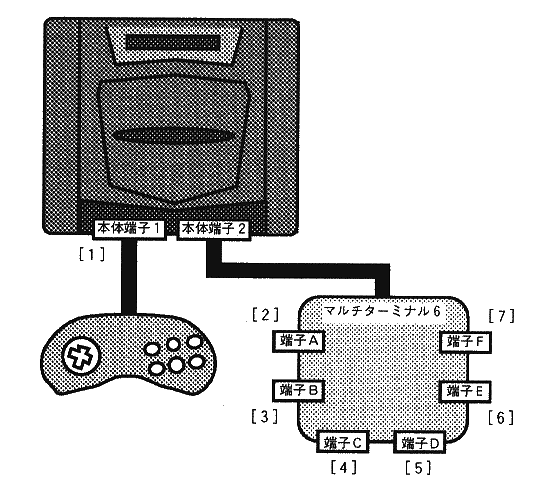
* This connection example (2) is not encouraged. In principle, connection example (1).
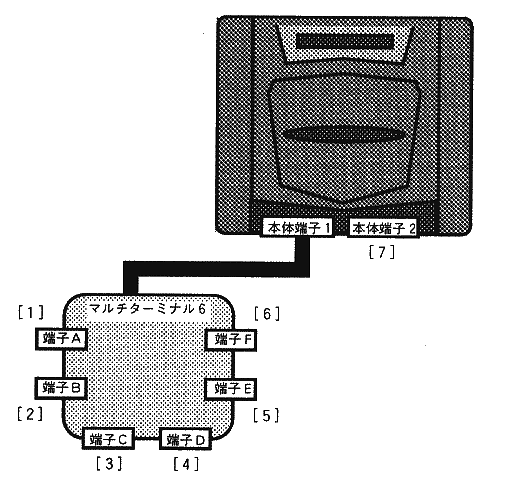
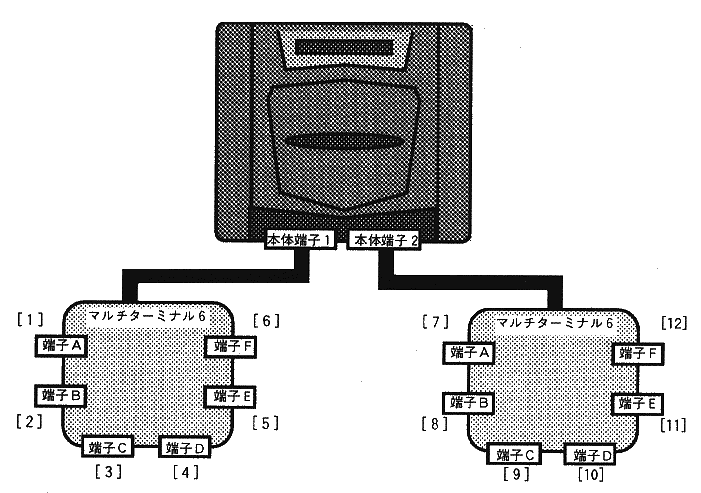
Check the input peripheral when using multi-terminal. As a general rule, "1. Basic items" will be applied to the parts where the contents are not described .
<< Recommended specifications >>
| (a) Check before start |
◆ Checking the corresponding P (registration of valid terminals)
| (b) Check at start |
◆ Start application
* In a multiplayer game where you can participate in the middle, you may start from other than 1P.
◆ Determining the terminal to use
(I) Select the terminal to be used from the effective terminals , left-justified in ascending order of terminal number .
(Ii) Select the terminal to be used from the effective terminals in ascending order of the terminal number (assign the operation number), but only the terminal for which the start button is pressed at a specific place such as the title screen is used .
* In the case of rule (ii), an operation number may be assigned to an unused terminal.
* When applying Rule (ii), the specifications must be such that the operation numbers are not confused. (The moment you press the start button, which player participated is displayed on the screen, and the reaction of the input is displayed on the screen, etc.)
| (c) Check in the main game |
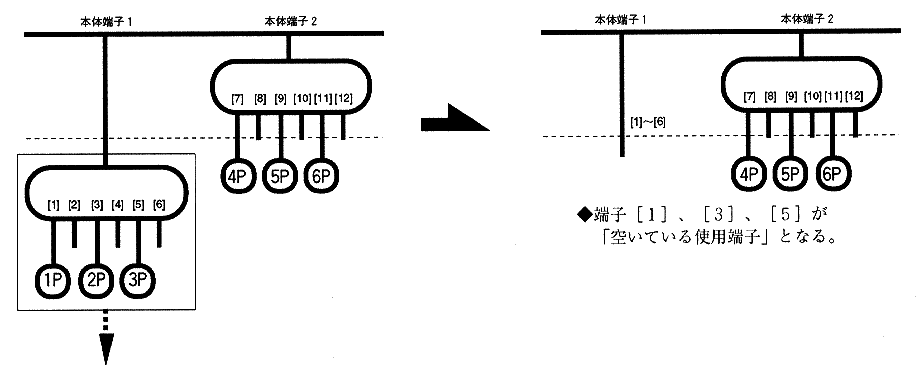
◆ Checking for insertion and removal
(i) When pulled out
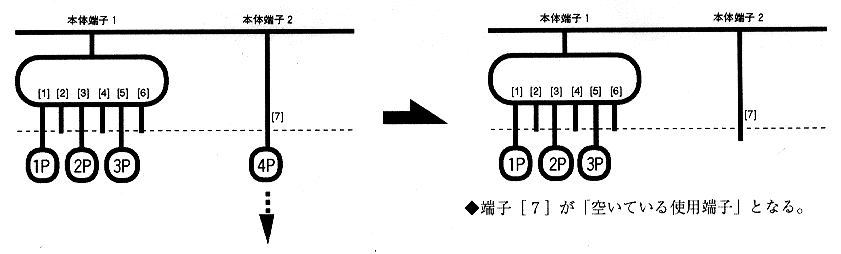
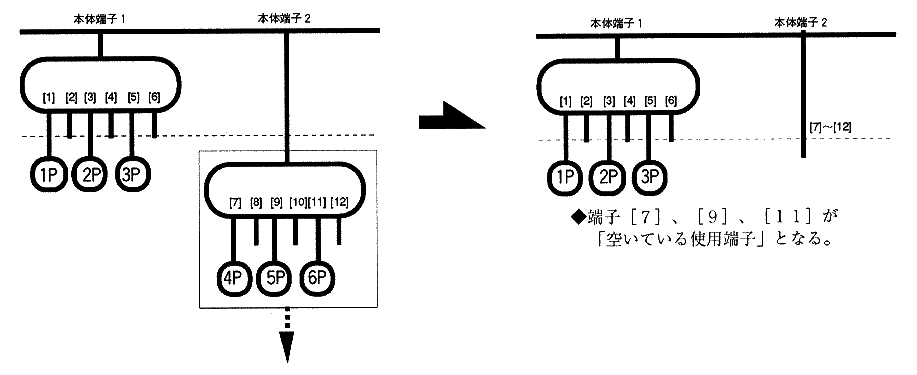
(ii) When inserted
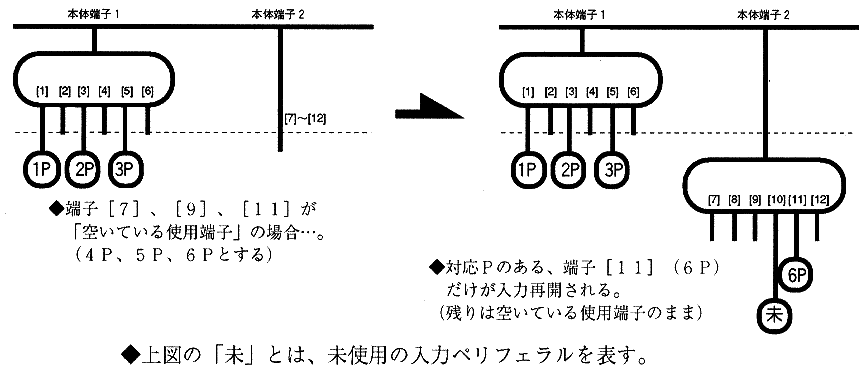
* In both cases, wait for the release if in the paused state.
* Even if a P other than the used P that was pulled out is returned, if it is a corresponding P, the input is restarted.
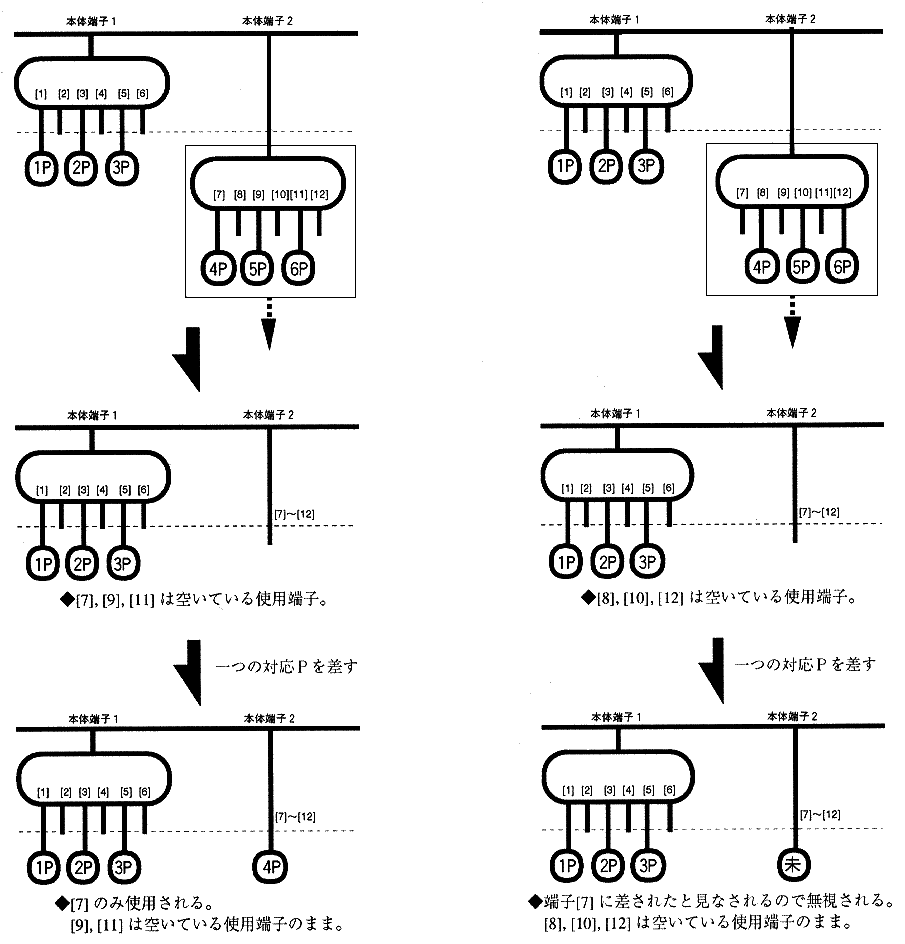
(iii) When replaced
[When replaced with a small number of terminals] (multi-terminal → one peripheral)
→ It is considered that the terminal is the youngest of the terminals before replacement (see Figure 2-9 and 2-10).
[When replaced with many terminals] (one peripheral → multi-terminal) → Only the youngest terminal among the replaced terminals is valid (see Figure 2-10).
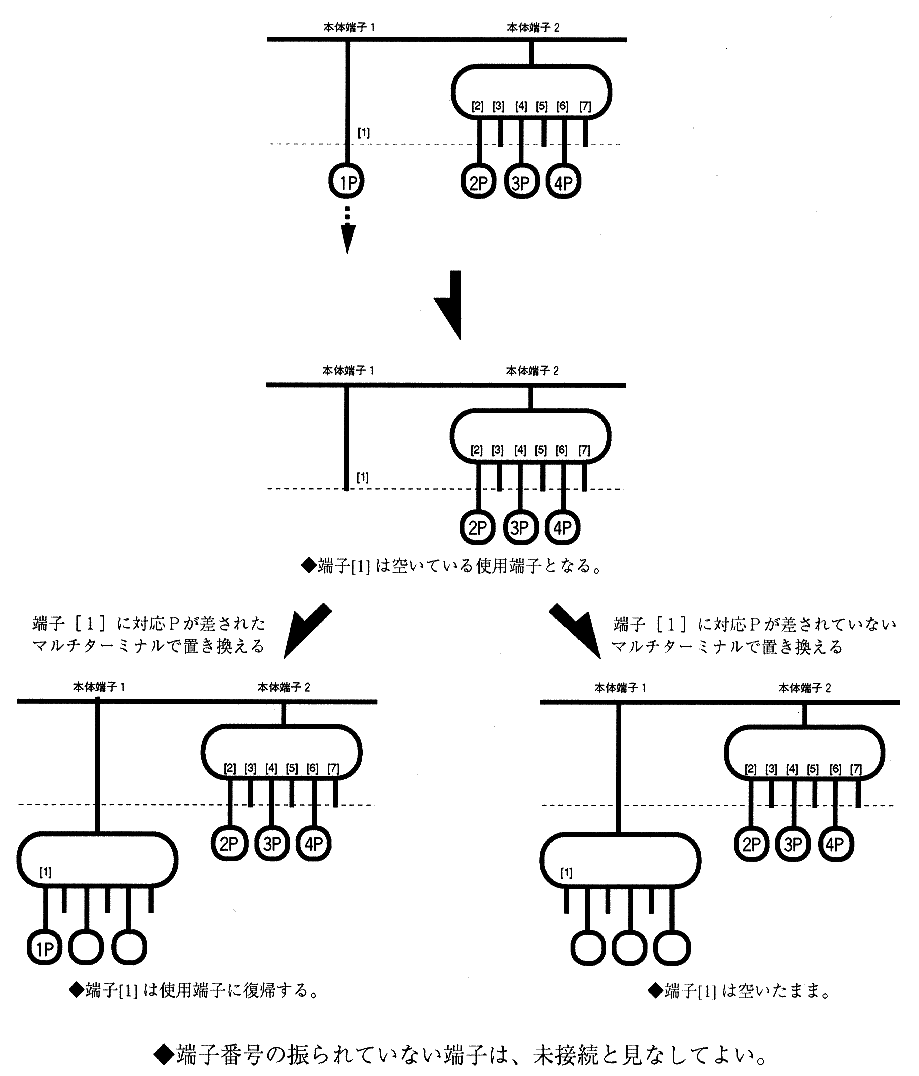
(iii) When added
In an application that uses a multi-terminal and has [Join in the middle], there is a possibility that the operation number will be reversed if it is additionally inserted.
* In principle, the multi-terminal setting principle allows there to be space between the terminals used, and also allows additional insertion during the main game when there is [Participation in the middle]. Therefore, if it is additionally inserted into a vacant terminal, the operation number may be reversed.
In this case, the following rules shall prevent the operation number from being reversed.
* Most multi-terminal users assume that they are using this in a left-justified connection as specified in the instruction manual.
(2. Multi-terminal 6, finished)